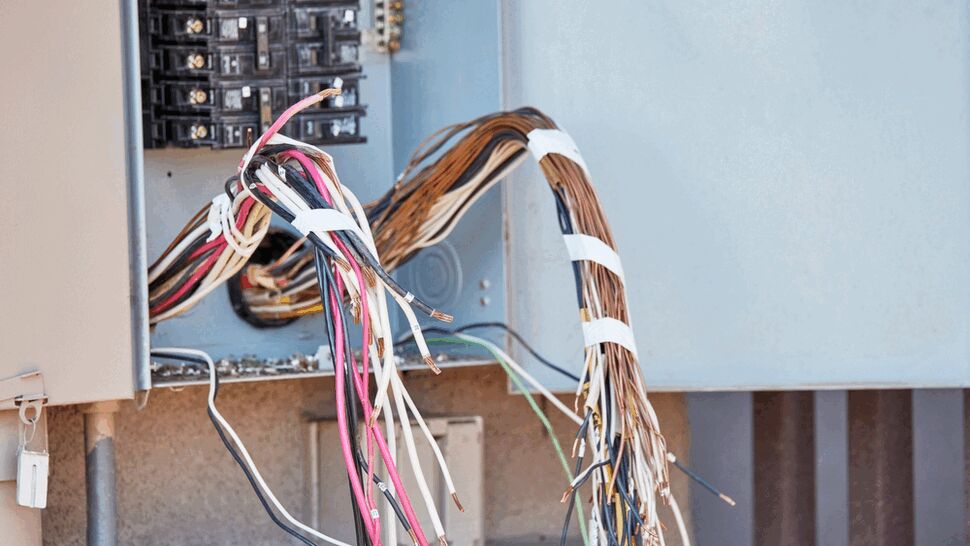
Quick answer: Puget Sound homeowners should generally budget about $20,000 to $35,000 for a smaller, accessible home; $30,000 to $60,000 for a typical 1,500- to 2,500-square-foot finished home; and $50,000 to $100,000 or more for a larger, occupied, plaster-walled, knob-and-tube, or difficult-access home. A panel or utility-service upgrade, extensive finish restoration, specialty circuits, hazardous-material work, and temporary housing can raise the total.
Last reviewed: August 2026. These figures are planning ranges, not a quote. Final pricing depends on the property, project scope, materials, access, permits, taxes, and conditions discovered during the work.
This guide is designed for homeowners in Federal Way, Puyallup, Lakewood, Gig Harbor, Auburn, Lacey, Olympia, Bremerton, Kent, Tacoma, and surrounding Puget Sound communities who want a realistic planning range before requesting a project-specific proposal.
A true whole-house rewire is not simply replacing a few outlets. It can include tracing and abandoning unsafe wiring, installing new grounded branch circuits, bringing required locations and protection up to current standards, replacing devices and fixtures, coordinating a panel or service upgrade, opening and repairing finishes, permitting, inspections, labeling, testing, and energizing the home in phases.
For preliminary planning, electrical-only rewiring commonly works out to roughly $12 to $25 per finished square foot in the Puget Sound market. A more complete homeowner budget that includes access openings, drywall or plaster restoration, painting, panel work, project management, and ordinary corrections may land closer to $18 to $35 per square foot. Per-square-foot figures are only screening tools: access, wall construction, circuit count, and existing conditions matter more than floor area alone.
These are consumer planning ranges for Seattle, Tacoma, Olympia, Bellevue, Everett, and nearby communities. The final scope must be developed by a qualified electrical contractor after inspecting the panel, service, accessible wiring, attic, crawlspace, basement, grounding, and representative devices.
Typical Whole-House Rewire Costs
Project condition | Typical project range |
|---|---|
Partial rewire or priority circuits | $8,000–$20,000+ |
Small home with open framing or strong access | $18,000–$32,000+ |
Small finished home, approximately 1,000–1,500 sq. ft. | $22,000–$40,000+ |
Typical finished home, approximately 1,500–2,500 sq. ft. | $30,000–$60,000+ |
Older knob-and-tube or plaster home | $45,000–$85,000+ |
Large home, approximately 2,500–4,000 sq. ft. | $55,000–$100,000+ |
Large, luxury, difficult-access, or highly customized home | $90,000–$150,000+ |
Ranges are broad because “rewire” proposals may include different device counts, lighting, panel work, wall repair, painting, and code corrections. Confirm the exact inclusions before comparing prices.
What Each Rewire Budget Level Usually Means
Partial or priority rewire: $8,000–$20,000
This may address unsafe circuits, ungrounded receptacles, a kitchen or bedroom group, or accessible knob-and-tube while leaving verified modern wiring in service. It is not a whole-house replacement unless every branch circuit and affected device is documented.
Typical full rewire: $30,000–$60,000
This commonly covers a finished 1,500- to 2,500-square-foot home with reasonable attic, crawlspace, basement, or wall access; new copper branch wiring; modern device protection; standard switches and receptacles; permits; inspections; labeling; and ordinary access repair.
Older or difficult home: $45,000–$85,000
Plaster and lath, occupied rooms, limited chases, finished basements, multiple additions, knob-and-tube, aluminum conductors, crowded framing, and poorly documented prior alterations materially increase labor, protection, and restoration.
Large or premium project: $90,000–$150,000+
Large homes, designer lighting, smart controls, extensive recessed lighting, multiple panels, high-load equipment, 320/400-amp service, trenching, structural access, premium finish restoration, or major utility coordination can create a six-figure electrical project.
Example Rewire Project Budgets
Example project | Preliminary planning budget |
|---|---|
1,200 sq. ft. vacant home with attic and crawl access | $20,000–$35,000+ |
1,800 sq. ft. occupied finished home; standard devices | $30,000–$50,000+ |
2,200 sq. ft. older home with knob-and-tube and plaster | $45,000–$75,000+ |
3,000 sq. ft. home with finished basement and panel upgrade | $60,000–$100,000+ |
Large custom home with lighting and service expansion | $90,000–$150,000+ |
Where the Rewire Budget Goes
Project component | Typical planning allowance |
|---|---|
Investigation, circuit mapping, scope, and planning | $1,500–$5,000+ |
Protection, access, demolition, and debris handling | $2,500–$8,000+ |
Branch-circuit wiring and electrical labor | $18,000–$50,000+ |
Receptacles, switches, boxes, plates, and standard devices | $3,000–$12,000+ |
Lighting connections and standard fixture installation | $2,000–$10,000+ |
Panel replacement or 200-amp service upgrade | $6,000–$15,000+ |
Grounding, bonding, surge, AFCI, and GFCI corrections | $2,500–$10,000+ |
Drywall or plaster repair and painting | $5,000–$25,000+ |
Permits, inspections, testing, and documentation | $1,000–$4,000+ |
Component allowances overlap and should not be added automatically. A contractor may bundle labor, materials, supervision, testing, and permit coordination. Use this table to expose missing scope and exclusions.
Occupied Home vs. Vacant or Open-Wall Rewire
Site condition | Typical cost impact |
|---|---|
Vacant home with open walls | Lowest-cost condition; direct access and efficient sequencing |
Vacant finished home | Baseline finished-home range |
Occupied home with furnishings | Often adds 10%–25% for protection, phasing, cleanup, and daily restoration |
Plaster and lath finishes | Often adds $8,000–$25,000+ for careful access and specialized repair |
Finished basement or inaccessible floor system | Often adds $5,000–$20,000+ depending on routing |
Quick answer: ACCESS DRIVES COST: A low electrical quote may exclude wall and ceiling openings, patching, texture matching, plaster repair, trim removal, wallpaper, cabinetry, tile, painting, or cleaning. Require the proposal to state who opens and restores every affected surface.
Panel and Electrical Service Upgrade Costs
Rewiring the branch circuits does not automatically mean the utility service must be enlarged, but the existing service, meter, panel, grounding, available fault current, and load calculation must support the completed home. Heat pumps, electric water heating, ranges, EV charging, hot tubs, and future electrification may change the recommendation.
Panel or service scope | Typical installed planning range |
|---|---|
Replace interior panel without utility service change | $4,500–$9,000+ |
Typical 200-amp service and panel upgrade | $6,000–$15,000+ |
Complex service relocation or overhead mast work | $10,000–$25,000+ |
Underground service, trenching, or utility civil work | $15,000–$40,000+ |
320/400-amp or multi-panel service | $20,000–$50,000+ |
Whole-home surge protection | $700–$2,000+ |
Utility requirements, transformer capacity, meter location, trenching, service conductors, exterior restoration, and scheduling can materially change service-upgrade cost and lead time.
Knob-and-Tube, Aluminum, and Ungrounded Wiring
Knob-and-tube wiring
The scope should identify where it exists, what can be removed, what will be permanently disconnected and labeled, and whether insulation, concealed splices, or inaccessible areas complicate replacement. Do not assume every visible portion represents the full system.
Aluminum branch-circuit wiring
Some homes contain solid aluminum branch wiring. The solution may range from approved connection remediation to circuit replacement depending on condition, device compatibility, scope, and professional evaluation. Require the chosen method to be stated clearly.
Ungrounded wiring
Replacing two-prong receptacles with three-prong devices does not create an equipment ground. The proposal should describe new grounded wiring, permitted protective alternatives where applicable, labeling, testing, and which circuits - if any - remain ungrounded.
Devices, Circuits, and Code-Related Upgrades
Electrical scope | Typical planning allowance |
|---|---|
Standard receptacle, switch, box, and plate | $250–$650+ per location within a rewire |
New dedicated 120-volt circuit | $1,000–$2,500+ |
New 240-volt appliance circuit | $1,500–$4,000+ |
Recessed light with switching | $500–$1,200+ each |
Smoke and carbon-monoxide alarm interconnection | $2,000–$6,000+ whole home |
AFCI/GFCI device and breaker coordination | $2,000–$8,000+ whole home |
Grounding and bonding corrections | $1,500–$6,000+ |
Current-code requirements are project- and jurisdiction-specific. A rewire may trigger new protection, spacing, alarm, grounding, and circuit requirements within the altered scope, but it does not automatically require every unrelated part of the property to be rebuilt.
Drywall, Plaster, Painting, and Finish Restoration
Finish-restoration scope | Typical planning range |
|---|---|
Limited drywall patching and touch-up | $3,000–$8,000+ |
Whole-home drywall patching, texture, and paint blending | $7,500–$18,000+ |
Plaster and lath repair | $10,000–$25,000+ |
Broad repainting for consistent appearance | $8,000–$25,000+ |
Wallpaper, tile, cabinetry, or specialty-finish restoration | Project-specific |
Patch-and-paint allowances should define the number and size of openings, texture standard, full-wall versus spot painting, color matching, trim work, wallpaper, protection, and whether lead-safe practices or testing are required.
Permits, Inspections, and Utility Coordination
Whole-house rewiring requires an electrical permit and inspection. In Washington, the electrical contractor must obtain its own permit for contracted work. The authority may be Washington L&I, Seattle, Tacoma Power, or another local jurisdiction. The project may require rough-in, cover, service, and final inspections, and wiring should not be concealed before required approval.
Approval or coordination item | Typical planning allowance |
|---|---|
Electrical permit and inspections | $500–$2,500+ |
Additional city, service, or plan-review fees | $500–$3,000+ |
Utility disconnect, reconnect, or engineering | Project-specific |
Temporary power or occupied-home phasing | $1,500–$6,000+ |
Structural or architectural coordination if needed | $1,500–$8,000+ |
Quick answer: DO NOT COVER WORK EARLY: Confirm the inspection sequence before drywall or plaster repair. Closing access before the required electrical inspection can lead to reopening finished surfaces, added cost, and schedule delays.
Hidden Conditions and Contingency
Common discoveries include concealed junction boxes, mixed wiring types, abandoned but energized conductors, damaged insulation, overloaded circuits, double-tapped breakers, undersized boxes, ungrounded metal, scorched connections, water damage, pest damage, illegal additions, blocked chases, asbestos-containing materials, and lead paint.
Homeowners should generally retain 10% to 15% contingency for a well-investigated, accessible project and 15% to 25% for an older, occupied, plaster-walled, or poorly documented home. Keep contingency as an owner-controlled reserve used only through documented change orders.
What Makes a Whole-House Rewire More Expensive?
Limited access
No attic, low crawlspace, finished basements, vaulted ceilings, tile, masonry, and built-ins force slower routing and more finish disturbance.
More circuits and devices
Large kitchens, offices, workshops, specialty lighting, electric appliances, EV chargers, spas, and HVAC equipment increase circuit count and panel demand.
Occupied work
Furniture protection, daily cleanup, phased outages, security, pets, and maintaining essential circuits reduce production efficiency.
Old or altered systems
Knob-and-tube, aluminum wiring, additions, subpanels, undocumented remodeling, and mixed grounding methods require investigation and correction.
Service and utility work
Meter relocation, mast changes, trenching, transformer limitations, utility engineering, and exterior restoration can add cost and time.
Premium finish standards
Plaster, custom millwork, wallpaper, tile, decorative fixtures, and full-wall repainting require specialty trades and careful sequencing.
What Should a Complete Rewire Estimate Include?
- Rooms, floors, structures, panels, circuits, devices, fixtures, and wiring types included in the scope
- Circuit map or device schedule; standard quantities and unit prices for added locations
- Protection, furniture handling, access openings, demolition, cleanup, hauling, and daily occupied-home procedures
- Branch wiring, boxes, grounding, bonding, breakers, AFCI/GFCI protection, surge protection, alarms, labeling, and testing
- Panel and service scope, load calculation, utility coordination, trenching, meter work, shutdowns, and temporary power
- Drywall or plaster repair, texture, primer, painting, trim, wallpaper, tile, cabinetry, and other finish exclusions
- Permits, inspections, inspection holds, owner-purchased fixtures, allowances, taxes, schedule, change orders, and warranty
- Identification of wiring or areas that will remain, plus the method for disconnecting and documenting abandoned wiring
Frequently Asked Questions About Whole-House Rewiring
How much does a whole-house rewire cost in Puget Sound?
A smaller accessible home may cost $20,000 to $35,000. A typical 1,500- to 2,500-square-foot finished home commonly costs $30,000 to $60,000. Older, larger, occupied, plaster, or knob-and-tube homes commonly cost $50,000 to $100,000 or more.
Does a whole-house rewire include a new panel?
Not always. Some proposals include only branch circuits and devices. The panel, meter, service conductors, grounding, utility work, surge protection, and load calculation should each be identified as included or excluded.
Does the price include drywall and painting?
Often it does not. Electrical contractors may make access openings but exclude finish restoration. Require the proposal to identify who patches drywall or plaster, matches texture, primes, paints, and repairs specialty finishes.
Can we live in the house during the rewire?
Sometimes, but it increases complexity. Expect phased outages, restricted rooms, dust control, daily cleanup, and temporary power planning. For extensive plaster work or long outages, temporary relocation may be more practical.
How long does a whole-house rewire take?
Electrical work in an average home often takes roughly one to three weeks, while finish restoration, service coordination, inspections, difficult access, or a larger occupied home can extend the overall project to several weeks.
Are permits required?
Yes. Washington L&I states that electrical work generally requires a permit and inspection, and Seattle requires a permit when wiring is installed, altered, extended, or connected. The responsible authority depends on the project address.
How much contingency should I carry?
Generally 10% to 15% for a well-defined accessible project and 15% to 25% for an older, occupied, plaster-walled, or poorly documented home.
DwellOne’s Approach to Transparent Rewire Pricing
Homeowners deserve to know whether a number represents partial circuit replacement, electrical-only work, or a complete permitted project with panel, service, access, finish restoration, testing, and inspection. DwellOne helps define the circuit and device count, existing wiring, protection, access, outage plan, permits, wall repair, painting, exclusions, schedule, and contingency so proposals can be compared fairly.
DwellOne Project Managers coordinate qualified electrical contractors and, when needed, drywall, plaster, painting, carpentry, insulation, HVAC, plumbing, utility, and hazardous-material trade partners. The goal is a safe, documented electrical system and a completed home - not an ambiguous low bid that leaves the owner to coordinate unfinished surfaces and inspections.
Important pricing information: The figures in this guide are general planning ranges for residential whole-house rewiring in the Puget Sound region as of August 2026. They are not a quote, offer, or guarantee. Actual costs may be higher or lower based on home size, access, occupancy, wiring type, circuit count, devices, panel and service needs, utility requirements, finishes, concealed conditions, permits, taxes, and final scope.