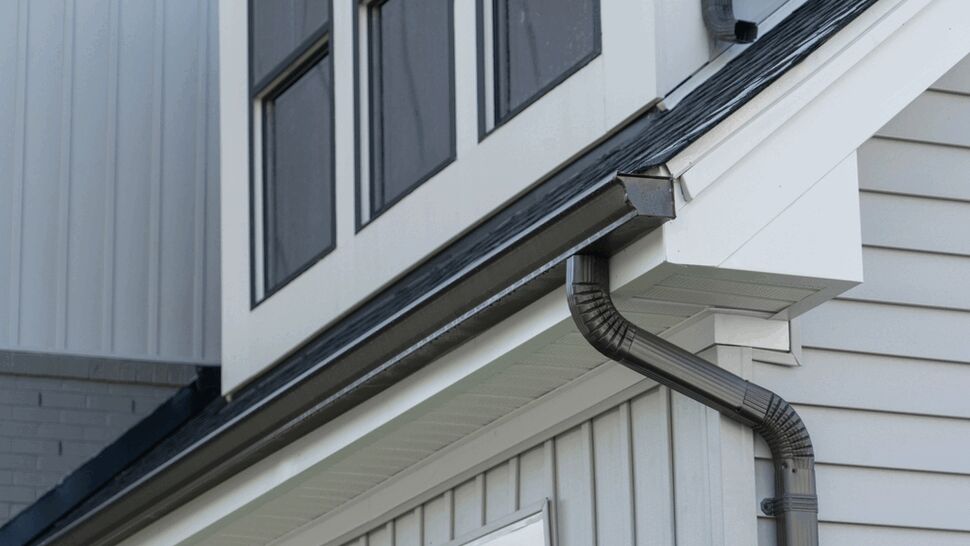
Quick answer: Puget Sound homeowners should generally budget about $2,250 to $4,750 for standard seamless aluminum gutters and downspouts on a simple one-story home, $3,750 to $7,500 for a two-story or more complex home, and $7,500 to $15,000 or more for large homes, 6-inch systems, difficult access, extensive gutter guards, or significant fascia repair. Copper, custom sheet metal, underground drainage, and concealed rot can raise the total substantially.
Last reviewed: August 2026. These figures are planning ranges, not a quote. Final pricing depends on the property, project scope, materials, access, permits, taxes, and conditions discovered during the work.
This guide is designed for homeowners in Federal Way, Puyallup, Lakewood, Gig Harbor, Auburn, Lacey, Olympia, Bremerton, Kent, Tacoma, and surrounding Puget Sound communities who want a realistic planning range before requesting a project-specific proposal.
Gutters protect the roof edge, fascia, siding, foundation, landscaping, and lower-level spaces by collecting roof runoff and directing it to a safe discharge point. In the Puget Sound climate, the right system depends on roof area, slope, valleys, tree debris, gutter capacity, downspout count, outlet size, discharge route, and the condition of the roof edge - not just the home’s square footage.
For preliminary planning, professionally installed 5-inch seamless aluminum gutters commonly cost about $10 to $20 per linear foot for a complete replacement project once ordinary removal, hangers, corners, outlets, and access are considered. Six-inch, steel, custom fascia-style, half-round, copper, multi-story, or difficult-access work costs more. Downspouts, guards, fascia repairs, and underground drainage should be priced separately or clearly identified as included.
These are consumer planning ranges for Federal Way, Puyallup, Lakewood, Gig Harbor, Auburn, Lacey, Olympia, Bremerton, Kent, Tacoma, and surrounding Puget Sound communities. Small jobs often carry minimum mobilization charges, so multiplying a short run by a per-foot figure can understate the actual project price.
Typical Gutter Replacement Costs
Gutter project level | Typical project range |
|---|---|
Small repair, short run, or added downspout | $750–$2,500+ |
Simple one-story home; standard aluminum | $2,250–$4,750+ |
Typical two-story home; standard aluminum | $3,750–$7,500+ |
Large or complex home; 5- or 6-inch aluminum | $6,000–$12,000+ |
Gutters plus broad gutter-guard installation | $7,500–$15,000+ |
Extensive fascia, soffit, and roof-edge repair | $10,000–$25,000+ |
Copper, zinc, custom, or architectural system | $15,000–$40,000+ |
Ranges assume professional installation and ordinary residential access. Underground drainage, roof replacement, structural reconstruction, hazardous-material work, and major stormwater improvements are separate unless stated.
Installed Cost by Gutter Material and Style
Gutter material or style | Typical installed planning range |
|---|---|
5-inch seamless aluminum K-style | $10–$20+ per linear ft. |
6-inch seamless aluminum K-style | $16–$28+ per linear ft. |
Aluminum fascia-style gutter | $18–$32+ per linear ft. |
Galvanized or coated steel gutter | $18–$32+ per linear ft. |
Aluminum half-round gutter | $22–$40+ per linear ft. |
Copper half-round or K-style gutter | $40–$75+ per linear ft. |
Zinc or custom architectural sheet metal | $45–$90+ per linear ft. |
Per-foot figures are planning tools. Corners, miters, outlets, end caps, hangers, roof height, access, tear-off, waste, and job minimums can materially affect the effective price per foot.
Example Gutter Project Budgets
Example project | Preliminary planning budget |
|---|---|
120 linear ft.; one-story rambler; four downspouts | $2,250–$4,250+ |
180 linear ft.; two-story home; six downspouts | $3,750–$7,000+ |
220 linear ft.; complex roof; 6-inch aluminum | $6,000–$11,000+ |
180 linear ft.; aluminum gutters plus premium guards | $7,500–$13,000+ |
200 linear ft.; fascia repair and drainage corrections | $9,000–$20,000+ |
180 linear ft.; architectural copper system | $15,000–$30,000+ |
Where the Gutter Budget Goes
Project component | Typical planning allowance |
|---|---|
Measurement, layout, mobilization, and protection | $500–$1,500+ |
Existing gutter and downspout removal | $3–$7+ per linear ft. |
Seamless gutter fabrication and installation | $10–$28+ per linear ft. |
Downspouts, elbows, straps, and extensions | $300–$750+ each |
Inside and outside corners or custom miters | $150–$450+ each |
Gutter guards or screens | $12–$30+ per linear ft. |
Fascia and soffit repairs | $2,000–$15,000+ |
Underground drainage or drywell improvements | $2,500–$20,000+ |
Allowances overlap and should not be added automatically. A complete proposal should identify measured footage, gutter profile and gauge, downspout count and size, guards, repairs, disposal, discharge work, and exclusions.
Five-Inch vs. Six-Inch Gutters
Five-inch gutters
Five-inch K-style aluminum is common on straightforward residential roof areas. It may be adequate when roof planes, valleys, outlet sizes, downspout spacing, and maintenance conditions support the expected flow.
Six-inch gutters
Six-inch gutters provide more capacity and are often considered for large or steep roof planes, long runs, concentrated valleys, metal roofs, limited outlet locations, or areas that have overflowed. The downspouts and outlets must also be sized appropriately; a larger trough with undersized outlets may not solve the problem.
Quick answer: CAPACITY IS A SYSTEM: Do not choose gutter size in isolation. Require the installer to consider tributary roof area, pitch, valleys, rainfall, gutter slope, outlet openings, downspout size and count, discharge piping, debris load, and the consequences of overflow.
Downspout and Drainage Costs
Drainage component | Typical installed planning range |
|---|---|
New aluminum downspout with elbows and straps | $300–$750+ each |
Oversized 3×4-inch downspout upgrade | $150–$350+ added per downspout |
Decorative rain chain and basin | $500–$2,000+ each |
Above-grade extension or splash block | $100–$400+ each |
Buried solid-pipe extension | $1,500–$5,000+ per run |
Catch basin, cleanout, or pop-up emitter | $500–$2,500+ each |
Drywell, dispersion, or broader stormwater work | $5,000–$20,000+ |
A gutter project is incomplete if water is merely moved from the roof to a damaging location. Confirm where every downspout discharges, whether existing underground piping is functional, and whether the proposed route is allowed for the property.
Gutter Guard Costs and Tradeoffs
Guard type | Typical installed planning range |
|---|---|
Basic screen or perforated cover | $8–$16+ per linear ft. |
Heavy-duty aluminum cover | $12–$24+ per linear ft. |
Micro-mesh guard system | $18–$35+ per linear ft. |
Premium proprietary guard system | $25–$45+ per linear ft. |
Guard removal and reinstallation for roofing | $5–$15+ per linear ft. |
No guard makes a gutter maintenance-free. Needles, pollen, roof granules, moss, and organic film can still accumulate. Ask how the system handles heavy valleys, how it is cleaned, whether it affects the roof warranty, and whether removal is required for future roof work.
Fascia, Soffit, and Roof-Edge Repair Costs
Repair scope | Typical planning range |
|---|---|
Localized wood fascia replacement | $25–$65+ per linear ft. |
Broad fascia replacement and painting | $40–$90+ per linear ft. |
Localized soffit repair | $500–$2,500+ per area |
Broad soffit replacement | $30–$80+ per sq. ft. |
Rafter-tail or outlook repair | $750–$3,000+ each |
Drip-edge or roof-edge flashing correction | $10–$30+ per linear ft. |
Rot is often concealed behind the existing gutter or metal wrap. Repair pricing should define demolition, structural wood, priming, painting, flashing, roofing disturbance, ventilation openings, pest damage, and how unforeseen deterioration will be handled.
Quick answer: DO NOT FASTEN INTO ROT: Gutters depend on sound backing and properly spaced hangers. Installing new gutters over deteriorated fascia may look acceptable initially but can lead to loose fasteners, poor slope, leaks, and failure under water, snow, or debris loads.
Removal, Disposal, and Site Protection
A complete replacement price should include removal of existing gutters, downspouts, spikes or hangers, outlet fittings, sealants, and job debris. It should also address protection for siding, windows, roofing, landscaping, decks, vehicles, air-conditioning equipment, and pedestrian areas.
Removal or protection item | Typical planning allowance |
|---|---|
Gutter and downspout removal and disposal | $3–$7+ per linear ft. |
Difficult-access or multi-story removal | $5–$12+ per linear ft. |
Gutter-guard removal | $3–$10+ per linear ft. |
Landscape, deck, or equipment protection | $500–$2,500+ |
Lift, scaffold, or specialty access | $1,500–$8,000+ |
Permits and Stormwater Considerations
Ordinary like-for-like gutter replacement usually does not require a building permit, but structural roof-edge work, additions, major drainage changes, side-sewer connections, drywells, infiltration facilities, or work in sensitive areas may require review or permits. Requirements vary by address and jurisdiction.
Seattle and other Puget Sound jurisdictions regulate stormwater discharge. Existing downspouts may connect to a combined sewer, separated storm system, infiltration facility, or unknown underground piping. Do not disconnect, reconnect, or redirect a system without confirming the lawful and practical discharge route.
Hidden Conditions and Contingency
Common discoveries include rotten fascia, damaged rafter tails, missing or failed drip edge, roof-deck deterioration, inadequate slope, loose metal wrap, concealed insect damage, blocked underground drains, broken clay or plastic piping, buried connections, insufficient outlets, and unpermitted drainage changes.
Homeowners should generally retain 10% to 15% contingency for a visible, well-defined replacement and 15% to 25% when there is staining, sagging, known overflow, wrapped fascia, roof-edge deterioration, or underground drainage work. Contingency should remain owner-controlled and be used only through documented change orders.
What Makes a Gutter Project More Expensive?
Height and access
Two- and three-story elevations, steep slopes, tight property lines, conservatories, decks, wires, and landscaping slow production and may require specialized access.
Complex rooflines
Many corners, short runs, valleys, dormers, inside miters, roof-to-wall conditions, and multiple elevations require more fabrication and labor.
Higher-capacity systems
Six-inch gutters, oversized outlets, larger downspouts, heavier-gauge material, and more downspouts add material and installation time.
Fascia and structural repairs
Rot, failed paint, damaged rafter tails, missing backing, and roof-edge flashing corrections often exceed the cost of the gutter itself.
Specialty metals and profiles
Copper, zinc, steel, half-round, box, and custom architectural systems require premium material, joining methods, and skilled fabrication.
Drainage beyond the wall
Trenching, buried solid pipe, catch basins, cleanouts, drywells, restoration, and stormwater compliance can turn a gutter job into a drainage project.
What Should a Complete Gutter Estimate Include?
- Measured gutter and downspout footage, roof elevations, profile, width, material, gauge, color, and finish
- Hanger type and spacing, gutter slope, end caps, outlets, inside and outside miters, sealants, and expansion provisions
- Downspout size, quantity, locations, elbows, straps, cleanouts, extensions, and final discharge point
- Existing gutter, guard, and downspout removal; hauling, recycling or disposal; and cleanup
- Fascia, soffit, rafter-tail, drip-edge, roofing, siding, and paint repairs included or excluded
- Guard manufacturer and model, valley details, maintenance requirements, roof interface, and warranty limitations
- Protection for roofing, siding, windows, landscaping, decks, equipment, vehicles, and pedestrian areas
- Access equipment, permits, taxes, allowances, exclusions, schedule, payment terms, change orders, and workmanship warranty
Frequently Asked Questions About Gutter Cost
How much does gutter replacement cost in Puget Sound?
A simple one-story aluminum project commonly costs $2,250 to $4,750. A typical two-story or complex home commonly costs $3,750 to $7,500. Larger homes, 6-inch systems, guards, fascia repairs, or specialty metals can cost $7,500 to $20,000 or more.
How much do seamless aluminum gutters cost per foot?
For consumer planning in Puget Sound, complete seamless aluminum replacement commonly works out to about $10 to $20 per linear foot for 5-inch gutters and $16 to $28 or more for 6-inch gutters. Small jobs, height, corners, removal, and repairs can raise the effective rate.
Are 6-inch gutters worth it?
They can be for large or steep roof planes, concentrated valleys, long runs, metal roofs, or known overflow. The installer must also size the outlets, downspouts, and discharge route; increasing only the gutter width may not solve a drainage problem.
Do gutter guards eliminate cleaning?
No. Guards reduce certain debris but do not eliminate needles, pollen, moss, roof granules, or organic buildup. Every system still needs inspection and periodic maintenance.
Does gutter replacement include fascia repair?
Usually only if specifically stated. Because rot is often hidden behind the old gutter, the estimate should include unit pricing or a documented change-order method for fascia, soffit, rafter-tail, flashing, and paint repairs.
Do gutters require a permit?
Like-for-like gutter replacement usually does not, but structural repairs, major stormwater work, side-sewer connections, drywells, additions, or sensitive-site work may require permits or review. Confirm requirements for the project address.
How much contingency should I carry?
Generally 10% to 15% for a visible replacement and 15% to 25% where there is staining, sagging, rot, wrapped fascia, chronic overflow, or underground drainage work.
DwellOne’s Approach to Transparent Gutter Pricing
Homeowners deserve to know whether a number represents gutter troughs only or a complete roof-drainage system with removal, downspouts, outlets, corners, fascia repairs, guards, disposal, and safe discharge. DwellOne helps define footage, material, capacity, access, roof-edge condition, drainage route, repairs, allowances, exclusions, schedule, and contingency so proposals can be compared fairly.
DwellOne Project Managers coordinate qualified gutter, roofing, carpentry, painting, drainage, landscaping, and sheet-metal trade partners as needed. The goal is not merely a straight-looking gutter - it is a durable, maintainable system that captures water, remains securely attached, and moves runoff away from vulnerable parts of the home.
Important pricing information: The figures in this guide are general planning ranges for residential gutter replacement in the Puget Sound region as of August 2026. They are not a quote, offer, or guarantee. Actual costs may be higher or lower based on footage, height, access, roofline, material, capacity, downspouts, guards, fascia condition, drainage, concealed damage, permits, taxes, and final scope.