Quick answer: In Puget Sound, routine pruning commonly costs about $300 to $1,200 per tree, while removal often ranges from about $500 to $2,500 for a typical residential tree. Large conifers, hazardous trees, tight-access removals, crane work, emergency response, extensive hauling, and protected-tree requirements can raise a single-tree project to $3,000 to $10,000 or more.
Last reviewed: August 2026. These figures are planning ranges, not a quote. Final pricing depends on the property, project scope, materials, access, permits, taxes, and conditions discovered during the work.
This guide is designed for homeowners in Federal Way, Puyallup, Lakewood, Gig Harbor, Auburn, Lacey, Olympia, Bremerton, Kent, Tacoma, and surrounding Puget Sound communities who want a realistic planning range before requesting a project-specific proposal.
Tree work is usually priced by the complete scope rather than by height alone. A tree that can be safely felled into an open yard may cost far less than a smaller tree that must be climbed, rigged into sections, lowered over a roof, and carried through a narrow side yard.
For preliminary budgeting, homeowners should identify the number of trees, approximate height and trunk diameter, work requested, access, nearby targets, debris plan, stump plan, and whether an arborist report or permit may be required. The ranges below assume professional residential tree work by a properly qualified, insured trade partner under ordinary Puget Sound conditions.
These figures reflect DwellOne’s homeowner-project-management model, qualified trade-partner work, and current 2026 Puget Sound market conditions. They are intended for Federal Way, Puyallup, Lakewood, Gig Harbor, Auburn, Lacey, Olympia, Bremerton, Kent, Tacoma, and surrounding Puget Sound communities.
Typical Tree Removal Cost by Size and Complexity
Tree-removal scope | Typical project range |
|---|---|
Small ornamental or young tree, generally under 25 ft. | $400–$900+ |
Medium tree, approximately 25–50 ft. | $900–$2,500+ |
Large tree, approximately 50–80 ft. | $1,800–$4,500+ |
Very large tree or mature conifer, approximately 80 ft. or taller | $3,000–$8,000+ |
Hazardous, crane-assisted, highly restricted, or structure-adjacent removal | $5,000–$15,000+ |
Fallen tree or storm-damage response | $2,000–$12,000+ |
Removal ranges generally contemplate taking the tree down safely and ordinary cleanup. Stump grinding, permits, arborist reports, traffic control, utility coordination, crane mobilization, restoration, and hauling unusually large logs may be separate. Multiple trees completed during one mobilization may cost less per tree.
Typical Tree Pruning Cost
Pruning scope | Typical project range |
|---|---|
Small ornamental or fruit tree | $250–$650+ per tree |
Medium tree with routine clearance or maintenance pruning | $400–$1,200+ per tree |
Large tree with selective pruning or deadwood removal | $900–$2,500+ per tree |
Large technical prune near roofs, utilities, roads, or other targets | $1,500–$4,000+ per tree |
Crown reduction, structural correction, or restoration pruning | $1,200–$4,000+ per tree |
Small add-on work while a crew is already mobilized | $300–$450+ per crew hour |
Pruning should be priced around the objective and the number, size, and location of cuts - not merely “trim the tree.” Topping, indiscriminate shearing, or removing too much live canopy can damage a tree and create future hazards.
Additional Tree-Service Budget Allowances
Additional service | Preliminary budgeting range |
|---|---|
Single-stump grinding during a larger tree project | $150–$500+ |
Stand-alone stump-grinding mobilization and work | $300–$900+ |
Large stump, difficult access, or extensive surface roots | $600–$1,500+ |
ISA Certified Arborist consultation or basic risk assessment | $250–$600+ |
Written arborist report, permit support, or development documentation | $500–$1,500+ |
Extra wood, log, chip, or debris hauling | $300–$2,000+ |
Crane, lift, traffic control, or specialized mobilization | $1,000–$5,000+ |
Some contractors include chipping and routine debris removal in the main price; others price hauling separately. Large logs are heavy and expensive to handle. The proposal should say whether wood and chips will be removed, left onsite, cut into firewood lengths, or spread as mulch.
What Should a Complete Tree-Service Proposal Include?
- Each tree identified by location, species when known, and approximate size
- The exact objective: removal, clearance, deadwood, structural pruning, crown reduction, or risk mitigation
- Branches, trunk sections, or canopy areas that will be addressed
- Climbing, lift, crane, rigging, drop-zone, and property-protection assumptions
- Whether utility-line coordination, road control, or neighbor access is required
- Permit research, arborist documentation, and replacement-tree responsibility
- Whether logs, limbs, chips, and rakings will be hauled away or left onsite
- Stump height after removal and whether stump grinding is included
- Grinding depth, visible-root treatment, backfill, and surface-restoration exclusions
- Cleanup standard, schedule assumptions, insurance, and change-order process
When comparing estimates, confirm that every bidder is pricing the same trees, pruning objectives, debris handling, stump work, access assumptions, and permit responsibilities. A lower bid may leave the largest wood, exclude stump work, or specify a much lighter pruning scope.
What Makes Tree Removal More Expensive?
Height, diameter, and canopy volume
Tall trees and wide, heavy canopies take longer to climb, rig, lower, process, and haul. Diameter and wood weight can matter as much as height.
Targets below the tree
Roofs, fences, decks, vehicles, gardens, neighboring property, and overhead utilities reduce the usable drop zone and require controlled rigging.
Tree condition and stability
Decay, cracks, dead tops, root failure, storm loading, and hanging branches can make normal climbing unsafe and require a lift, crane, or different removal sequence.
Access and terrain
Steep slopes, waterfront lots, stairs, narrow gates, soft lawns, septic areas, and long hand-carry distances add labor and limit equipment.
Species and wood characteristics
Dense hardwood, brittle limbs, multiple leaders, heavy conifer limbs, thorns, and spreading root systems affect production time and handling.
Debris and log handling
Chipping brush is different from loading large trunk sections. Hauling, disposal, firewood cutting, milling, or leaving chips onsite should be stated separately.
Permits and protected trees
Jurisdictional rules may require notices, arborist reports, mitigation, replacement planting, or review before removal or significant pruning.
Emergency timing
After-hours mobilization, storm congestion, unstable trees, blocked access, and work over a damaged structure typically cost more than scheduled work.
Tree Pruning: What Are You Paying For?
Professional pruning is selective tree care, not simply cutting branches until the canopy looks smaller. The arborist or pruning lead should understand the homeowner’s goal and choose cuts that improve clearance, structure, safety, appearance, or tree health without creating unnecessary wounds.
Clearance pruning
Creates appropriate separation from roofs, siding, walkways, streets, or other targets. The proposal should state the desired clearance and avoid excessive one-sided pruning.
Deadwood removal
Removes specified dead, broken, or hanging branches. Define the minimum branch diameter when a comprehensive canopy cleaning is requested.
Structural pruning
Reduces competing leaders, poorly attached branches, or future failure potential, often most effective when trees are young.
Crown reduction
Shortens selected limbs back to suitable laterals. It is more deliberate than topping and may require many technically correct cuts.
Fruit-tree pruning
Balances fruit production, sunlight, manageable height, and long-term structure. Timing and species matter.
Tree Removal, Stump Grinding, and Restoration Are Different Scopes
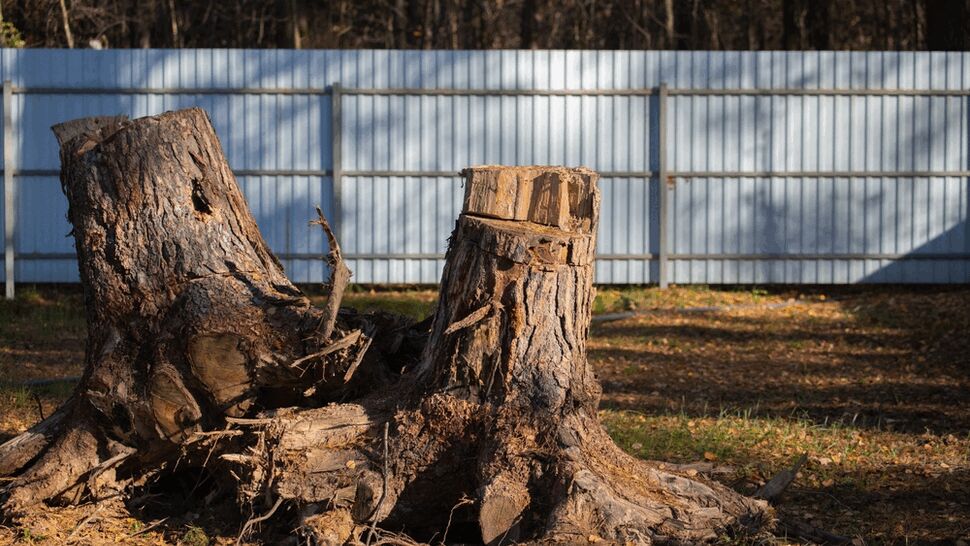
Tree removal usually ends with the trunk cut near grade. Stump grinding mechanically reduces the stump and some accessible surface roots below the surrounding grade, but it does not excavate the entire root system. Full root-ball removal is a separate excavation project and can affect utilities, hardscape, drainage, and landscaping.
Grinding leaves a mixture of wood chips and soil and may create a settling area as remaining roots decay. Backfill, imported soil, sod, planting, irrigation repair, fence work, and hardscape restoration should be identified separately rather than assumed.
Do Tree Removal or Pruning Projects Require Permits?
Requirements vary substantially by jurisdiction, tree size and classification, property zoning, critical areas, shorelines, development activity, and whether the tree is on private property or in the public right-of-way. Never assume that a tree may be removed simply because it is on a residential lot.
Seattle regulates removal and significant tree work through its tree-protection rules, with additional review possible for protected trees and environmentally critical areas. Tacoma requires a Tree Work Permit for removal, pruning, or planting involving trees in the city right-of-way or on public property. Other Puget Sound cities and counties have different thresholds. The project address and tree status should be checked before work is authorized.
Frequently Asked Questions About Tree-Service Cost
How much does it cost to remove a tree in Puget Sound?
Many routine residential removals fall between approximately $500 and $2,500. Small open-yard trees can cost less, while large conifers, restricted-access trees, hazardous trees, crane work, or removals near structures can cost $3,000 to $10,000 or more.
How much does tree pruning cost in Tacoma and nearby Puget Sound communities?
Routine pruning commonly costs approximately $300 to $1,200 per tree. Large-tree pruning, extensive deadwood, crown reduction, technical rigging, or work near roofs and utilities can cost $1,500 to $4,000 or more per tree.
Is stump grinding included with tree removal?
Usually not unless the proposal says so. A removal may leave the stump cut close to grade. Grinding, hauling grindings, backfill, imported soil, sod, and restoration should each be confirmed.
Why did two companies give very different tree-removal prices?
They may be planning different equipment, crew sizes, removal methods, cleanup levels, stump work, hauling, permit responsibilities, or risk allowances. Puget Sound consumer research found quotes of $1,355 to $3,650 for the same 35-foot oak removal.
Can pruning save a tree that someone recommended removing?
Sometimes. If the need for removal is uncertain, an assessment by an ISA Certified Arborist - particularly an independent consulting arborist - can clarify tree condition, risk, pruning options, and whether removal is justified.
Does homeowners insurance pay for tree removal?
Coverage depends on the policy and circumstances. Insurance is more likely to respond when a tree damages a covered structure or blocks insured access than when a standing tree is removed preventively. Contact the carrier before non-emergency work and document storm damage.
DwellOne’s Approach to Transparent Tree-Service Pricing
Homeowners deserve a more useful answer than “it depends.” Tree work does require onsite assessment, but useful planning ranges are possible when tree size, condition, access, targets, equipment, debris, stump work, and permitting are discussed openly.
DwellOne Project Managers coordinate qualified tree-service trade partners and manage the project from scope through completion. When appropriate, the scope can include an ISA Certified Arborist assessment before removal or major pruning decisions are made.
Important pricing information: The figures in this guide are general planning ranges for residential tree removal and pruning in the Puget Sound region as of August 2026. They are not a quote, offer, or guarantee. Actual costs may be higher or lower based on tree size, species, condition, access, targets, equipment, emergency timing, debris, stump work, permits, taxes, and final scope.